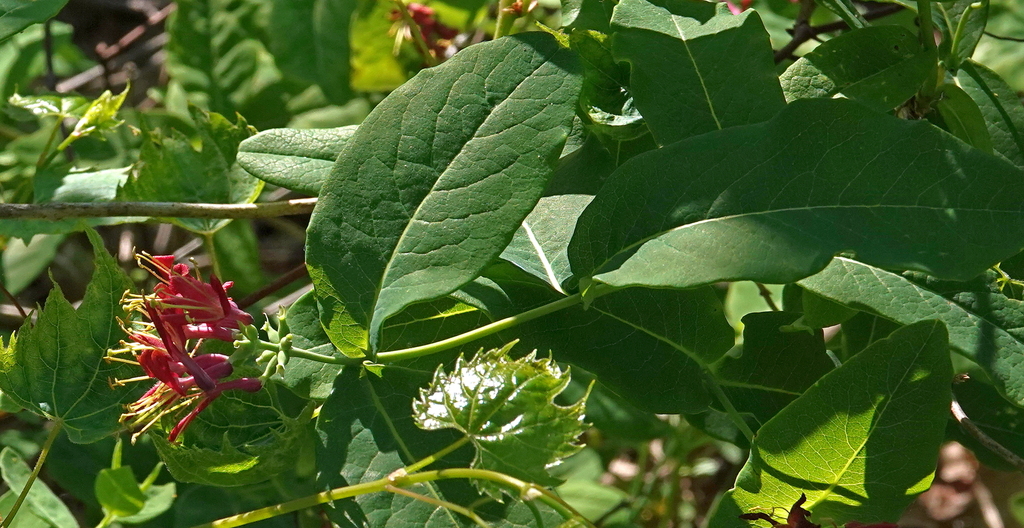
Based on current stock, seedings and orders, we anticipate having the following vine species available in the 2026 season.
We strive to offer the greatest diversity possible and may have additional species for the upcoming growing season.
Contact maya@naturalthemes.com to confirm availability.
wdt_ID
Image
Species (Botanical)
Common Name(s)
Family
Vine type
Blooming Time
Colour
Amount of Sunlight
Moisture Pref.
Drought Tolerance
Wildlife Associations
Soil Pref\'s
Remarks
Details
1
Apios americana
American Groundnut
Leguminosae
non-woody vine
mid summer
brown
Full Sun/Part Shade
Mesic
NO
nectar feeders
Rich
fragrant pea-like flowers, is able to fix nitrogen; edible tubers
2
Campsis radicans
Trumpet Creeper
Bignoniaceae
woody vine
summer
red-orange
full sun, part shade
mesic
YES
attracts hummingbirds
tolerant
A vigorous native vine of eastern North America, producing showy orange trumpet flowers that are highly attractive to hummingbirds. Thrives in full sun and a wide range of soils. In Ontario, native to the Carolinian (southwestern) region and not historically widespread elsewhere. Spreads readily by suckers and seed—best suited to large spaces or naturalized plantings where its aggressive growth can be accommodated.
3
Celastrus scandens
Bittersweet
Celastraceae
woody vine
late spring
greenish-white
full sun to shade
mesic
YES
fruit attracts birds
tolerant
typically dioecious, ideally has a fence to climb on
4
Dioscorea villosa
Wild Yam
Dioscoreaceae
non-woody
early summer
green
full sun, part shade
mesic
YES
insect pollinated, provides shelter for nesting birds and small mammals
tolerant
dioecious; spreads by rhizomes, has attractive heart-shaped leaves and seed capsules; naturally grows in deciduous woodlands
5
Clematis virginiana
Virgin's Bower
Ranunculaceae
woody vine
summer
white
full sun, part shade
mesic
YES
flowers attract pollinators
tolerant
dioecious, will creep or climb, fast-growing, seeds are as attractive as the flowers
10
Menispermum canadense
Canada Moonseed
Menispermaceae
woody vine
late spring, early summer
greenish-white
full sun, part shade
mesic
NO
flowers attract pollinators; fruit is eaten by woodland birds
rich loam
dioecious trailing or twining vine that can be used for erosion control, spreads by rhizomes; fruit is poisonous to humans
11
Parthenocissus vitacea
Virginia Creeper
Vitaceae
woody vine
late spring, summer
greenish-white
full sun, part shade, shade
mesic
YES
fruit is eaten by birds, larval host plant of Pandora Sphinx moth
tolerant
best to grow along fences as it climbs by tendrils which can damage buildings, stunning red fall foliage with blue non-edible berries, can be used as ground cover
14
Vitis riparia
Riverbank Grape
Vitaceae
woody vine
late spring
greenish-yellow
full sun, part shade
mesic
YES
flowers attract pollinators, fruit is food for many birds and mammals, larval host plant to Pandora Sphinx
tolerant
monoecious, climbs using tendrils
15
Clematis occidentalis
Purple Clematis
Ranunculaceae
woody
spring
blue, purple
full sun
tolerant
tolerant, prefers rich
Native habitat includes river banks and rocky woods.
17
Lonicera dioica
Glaucous Honeysuckle
Caprifoliaceae
woody
early summer
red, purple
full sun, part-shade
adaptable
The tubular red flowers attract hummingbirds and other pollinators, while the berries are desirable to birds.
calcareous soils
Found in a variety of dry to moist habitats, including open woods, slopes, rocky shores, thickets, and clearings. Does well in calcareous soils.