Native trees of Ontario form the canopy and understory of our forests and are essential for long-term habitat, carbon storage, shade, and climate resilience. They provide food, nesting sites, and shelter for countless
species while restoring the structure of healthy ecosystems.
Trees are ideal for:
reforestation and restoration projects
shade and cooling around homes and buildings
windbreaks and shelterbelts
privacy and long-term screening
stabilizing soil and improving water infiltration
planting the next generation of forest
When planting trees — and thinking about forests, even on a small scale — consider planting all layers of the forest by combining tree(s) with native
shrubs andwildflowers,vines and/or
ferns.
Based on current stock, seedings and orders, we anticipate having the following tree species available in the 2026 season.
Stock may be available as plugs, 1 gal, 2 gal &/or larger pots. Not all stock will be available at the same time.
Please inquire about current sizing, availability and pricing.
This table lists native tree species grown at Natural Themes Native Plant Nursery, based in eastern Ontario. Our native trees are propagated for ecological restoration, habitat creation, reforestation, and resilient landscape planting across the Quinte region and the broader Great Lakes–St. Lawrence area.
Species included are regionally native to eastern and southern Ontario or nearby Great Lakes ecosystems and include canopy and understory trees such as maples (Acer spp.), oaks (Quercus spp.), birches (Betula spp.), poplars (Populus spp.), willows (Salix spp.), and other locally appropriate native trees.
Inventory is updated seasonally and reflects trees grown using best practices to support healthy root development, transplant success, and long-term ecological function. Availability varies by size and growing season. Contact us for current availability.
wdt_ID
Image
Species (Botanical)
Common Name(s)
Family
Avg. Height
Blooming Time
Colour
Amount of Sunlight
Moisture Tolerance
Drought Tolerance
Wildlife Associations
Soil Tolerance
Remarks
Observed Range (iNaturalist)
Learn More
slug
Details
Companion Plants
1
Abies balsamea
Balsam Fir
Pinaceae
25 m
NA
NA
full sun, part shade, shade
moist, mesic, well-drained to moderately drained
low
Seeds are eaten by birds and rodents. This tree also provides shelter and nesting sites.
sand, loam,silt, rich, prefers acidic
A hardy fast-growing tree that supports wildlife. It prefers moist well-drained soils and can tolerate seasonal flooding, making it ideal for riparian zones, wet woodlands, and shaded understories.
abies_balsamea
Pairs best with shade-loving acidic-soil natives like spruce, birch, beaked hazelnut, mountain maple, bunchberry, wintergreen, lowbush blueberry, and ferns.
2
Acer rubrum
Red Maple
Aceraceae
25 m
early spring
red
full sun, part shade
mesic, moist, well-drained sites but tolerates flooding
low-moderate
Buds, flowers and seeds eaten are eaten by birds and small mammals. Leaves are browsed by deer.
sand, loam, clay, slightly acidic
The leaves turn red in the fall. It does well in poorly drained, shallow or sandy soils. It produced small, red flowers in early spring before leaves emerge. It is monoecious, both male and female flowers on the same tree.
acer-rubrum
Natural companions are a mix of wetland, swamp-edge and upland forest species such as silver maples, oaks, white pine, viburnums, elderberries, Spicebush, Witch Hazel, Canada Anemone, Blue Cohosh, Virgin's Bower vine.
5
Acer sacharinum
Silver Maple
Aceraceae
25 m
early to mid spring
greenish-yellow
full sun, part shade
wet, moist, mesic, flood tolerant
moderate
Provides food and habitat for various wildlife including birds, squirrels and other small mammals.
clay, loam, sand, best in moist drained sites but tolerates some standing water
Commonly found along riverbanks, floodplains, wetlands. A fast-growing maple and popular choice for quick shade. It's leaves have a distinctive, deeply lobed leaf with a silvery underside. A versatile and resilient tree with a life span of 100 years.
acer-sacharinum
6
Amelanchier laevis
Alleghany / Smooth Serviceberry
Rosaceae
10 m
early to mid spring
white
full sun, part shade, shade
dry, mesic, moist
moderately, once established.
Flowers attract bees, butterflies, and other pollinators in early spring. The berries are highly favored by birds. Squirrels, raccoons, and other mammals eat the fruits. Larval host plant for viceroy, striped hairstreak, tiger moths.
clay, loam, sand, silt, well-drained
Grows in full sun to part shade. It attracts pollinators in the spring and produces edible purplish-black berries that are very tasty to wildlife. Often found in well-drained soils and in thickets, open woods and sheltered slopes.
amelanchier-laevis
7
Asimina triloba
Pawpaw
Annonaceae
10 m
mid to late spring
purple
part shade (optimal), full sun (if soil is moist and rich),
mesic, moist, well-drained
low
Flowers are pollinated by flies and beetles, they are attracted to the flower's unpleasant odor. This cross pollination by insects is essential for fruit production. Fruit is tasty to raccoons, foxes, opossums, squirrels, and birds.
loam, clay-loam, fertile, like moisture but not waterlogged - drained
Natural range is the Carolinian zone but it is hardy across southern Ont. An understory of hardwood forests. Edible fruit. Monoecious but is self-incompatible, requires pollen from another to produce fruit.
asimina-triloba
8
Betula alleghaniensis
Yellow Birch
Betulaceae
25 m
late spring
catkins
full sun, part shade
moist, mesic, well-drained
Yes
Larval host plant for several butterflies and moths, notable Mourning Cloak and Duskywing. Buds, twigs, catkins, and seeds are food for birds & mammals.
Thrives in cool, moist, drained soils and found in mixed hardwood forests. Monoecious (a plant has both male and female flowers). Male flowers are catkins, they release pollen into the air which is carried to female flowers on same or nearby trees.
betula-alleghaniensis
9
Betula papyrifera
White Birch
Betulaceae
25 m
mid to late spring
catkins
full sun
dry, mesic, moist, well-drained, does well in floodplain soils and along stream banks
Yes, once established.
A larval host plant for numerous butterflies and moths. The seeds, buds, twigs, and catkins are food for birds & mammals.
sandy, loamy, clay, rich
Thrives in cool, moist, well-drained soils. Commonly found in mixed hardwood forests. Monoecious (self pollinating). The bark has been traditionally used by Indigenous Peoples for making canoes, baskets, and other items.
betula-papyrifera
10
Carya cordiformis
Bitternut Hickory
Juglandaceae
25 m
mid to late spring
catkins
full sun, part shade
mesic, moist, well-drained
moderately, once established.
Nuts are a critical food source for many wildlife species, including squirrels, chipmunks, deer, and various birds. Certain species of moths and caterpillars feed on the leaves of hickory trees, including hickory tussock moths.
loamy, rich
Found in southern and eastern regions of Ontario in lowland areas, along streams and upland areas with rich soil. Produces catkins and is wind pollinated. The fruit is a small bitter nut encased in a green husk. Monoecious.
carya-cordiformis
11
Carya ovata
Shagbark Hickory
Juglandaceae
25 m
mid to late spring
catkins
full sun, part shade
mesic, moist, well-drained
moderately, once established.
Larval food for Hairstreak butterflies. Nuts are eaten by mammals and larger birds.
rich, loamy
Has a distinctive shaggy bark. Produces catkins, monoecious, and wind pollinated. The fruit is edible. Nuts are highly valued by wildlife. Native to southern Ontario. Prefers moist, drained soils, found in upland areas, along riverbanks and in forests.
carya-ovata
12
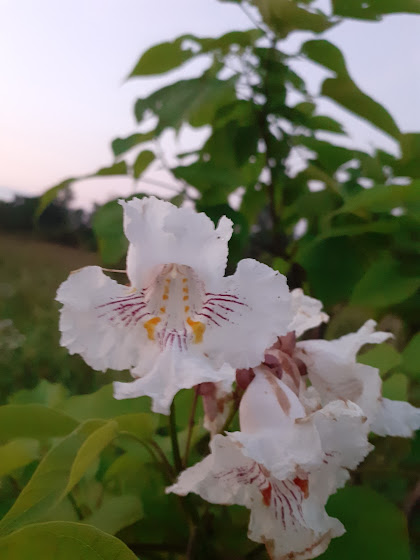
Catalpa speciosa
Northern Catalpa
Bignoniaceae
20 m
late spring
white, purple, yellow
full sun, part shade
dry, mesic, moist, well-drained
Yes
Flowers are insect pollinated and seeds are eaten by birds and small mammals.
sandy, loamy, clay
A near-native to Ontario (native to central and eastern U.S.) and widely planted across Southern Ontario where the climate is suitable for its growth. Known for their heart-shaped leaves, showy white flowers, long bean-like seed pods.