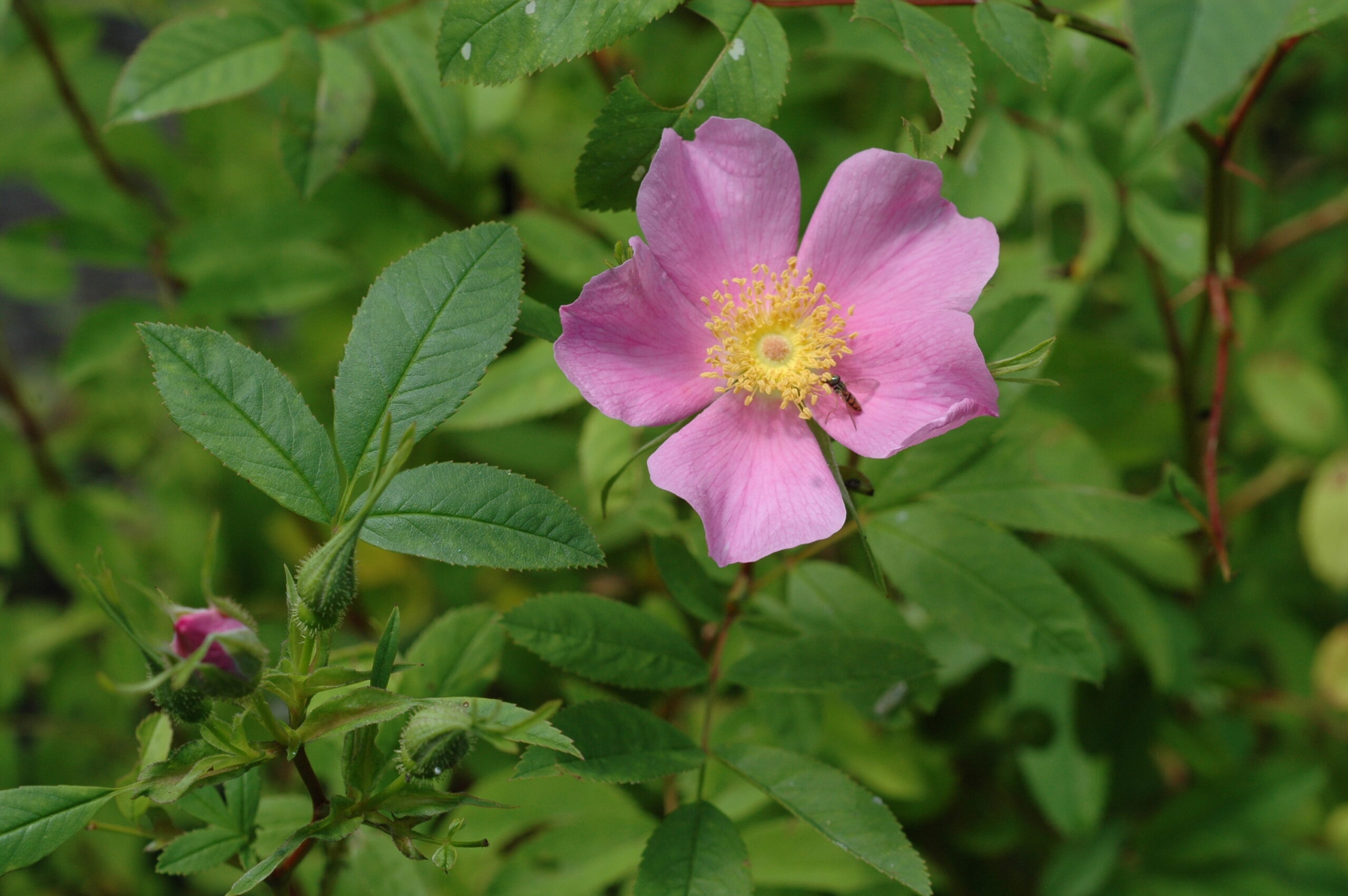
Provides food and cover for birds and mammals. Seeds are eaten by waterfowl, and dense thickets offer nesting sites.
sandy, loamy, silty, clay, rich, moist
Speckled Alder is native to eastern and central Canada including Ontario and across the Great Lakes region. It grows in wetlands, streambanks, swamps, bogs, and marshes. It spreads by rhizomes and can form dense thickets stabilizing soil and preventing er
3
Amelanchier alnifolia
Saskatoon Serviceberry
Rosaceae
3 m
spring
white
full sun, part-shade
moist moderate/mesic, dry, well-drained
Yes
It is insect pollinated, flowers support nectar feeders and the birds eat the fruit.
sandy, loamy, rocky, preference for slightly acidic soils
A widespread distribution across Canada from Ontario to BC. More commonly associated with central to western Canada (prairies and Boreal Forests) species but its distribution does come Into Ontario, including our Great Lakes region. It sends up suckers an
4
Amelanchier canadensis
Shadblow Serviceberry
Rosaceae
4.5 m
spring
white
full sun, part shade
well-drained
Yes, once established.
The flowers provide early nectar for pollinators such as bees, while the berries serve as a food source for birds and mammals.
sandy, loamy, prefers slightly acidic but can tolerate a range of pH
Known for its early spring flowers. It is found naturally in Eastern Canada including Ontario (and the southern Great Lakes region), Quebec and the Atlantic provinces. It grows in wooded areas ,along streambanks, edges of meadows and open mixed woodlands.
5
Amorpha canescens
Leadplant - NA in 2025
Leguminosae
up to 1 m
early to mid summer
purple
Full Sun/Part Shade
Dry, well-drained
YES
The plant provides important habitat for pollinators like bees and butterflies. The seeds are also a food source for some wildlife species. It is also a larval host plant to butterflies and moths.
sandy, loamy, gravelly, rocky
A showy shrub-like plant in the pea family. It naturally occurs in central North America, primarily central U.S. into the southwestern region of Ontario. Grows in open woodlands, prairies, and meadow-like habitats.
6
Amorpha fruticosa
False Indigo Bush
Leguminosae
3 m
summer
purple
Full Sun/Part Shade
moderate/mesic, dry, well-drained
Yes
Supports nectar feeders and is a larval host plant to several butterflies and moths.
sandy or loamy soils, clay loam
A showy legume that is able to grow on difficult soils. Its native habitats include stream and pond edges, open woods, and roadsides across central to Eastern North America with isolated populations extending into southwestern Ontario. It is monoecious, m
7
Arctostaphylos uva-ursi
Bearberry
Ericaceae
10 cm
late spring/early summer
white
full sun, part-shade
dry, well-drained
yes
The berries are consumed by bears (hence the name), birds, and other animals. Provides shelter for small ground-nesting birds and insects. A larval host plant for Elfin bufferflies.
poor, sandy, rocky, acidic, well-drained
Found particularly in the Canadian Shield region and occurs sporadically in southern Ontario, typically in specialized habitats such as sandy, open areas or rocky barrens. It is present in Great Lakes-St. Lawrence forests and extends into boreal regions.
8
Aronia melanocarpa
Black Chokeberry
Rosaceae
1.5 m
late spring
white
part shade
moist, wet, moderate/mesic, dry
moderately, once established
The nectar-rich flowers attract bees, butterflies, and other pollinators. Fruits are a food source for birds. Provides shelter for small mammals and ground-nesting birds.
sandy, loamy, clay, rocky
Grows in wetlands, bogs, forest edges, and open fields. Grows in eastern North America, including southern and central Ontario. Glossy, dark green leaves that turn vibrant red, orange, or purple in fall. It sends up suckers and will form thickets.
9
Ceanothus americanus
New Jersey Tea
Rhamnaceae
< 1m
summer
white
full sun, part-shade
dry, moderate/mesic, well-drained
yes
Fragrant flowers attract pollinators like bees and butterflies. Provides habitat and shelter for small wildlife.
New Jersey Tea (Ceanothus americanus) is a larval host plant for the endangered Mottled Duskywing butterfly (Erynnis martialis). The caterpillars of this skipper‑family butterfly feed on the leaves of New Jersey Tea (and its relative Prairie Redroot), making the shrub important for the butterfly’s life cycle in Ontario and parts of its range.
The Mottled Duskywing is listed as endangered under the provincial Endangered Species Act, and its continued presence depends on suitable habitat that includes healthy stands of New Jersey Tea for larval feeding and egg‑laying.
sandy, loamy, gravelly, poor, dry
Found in dry, sandy soils, prairies, and open woodlands, and common in the Great Lakes region. A low-growing shrub with attractive flower heads and a round, bushy shape. Small, clustered, creamy white to pale pink flowers
10
Cephalanthus occidentalis
Buttonbush
Rubiaceae
2 m
summer
white
full sun, part-shade
Wet, moist, can tolerate flooding
no
The flowers attract a variety of pollinators, including bees, butterflies, and hummingbirds. Birds and small mammals consume the seeds, while the dense foliage offers shelter and nesting sites. Waterfowl like ducks and shorebirds may also use the plant’s structure in wetland areas.
sandy, loamy, clay, as long as they retain moisture. Can tolerate alkaline but prefers acidic to neutral conditions.
Naturally found in our Ontario wetland habitats, including areas like marshes, swamps, and along stream banks. It is known for its unique, spherical flower clusters and its adaptability to wet conditions, making it a great choice for wetland restoration a
11
Cornus alternifolia
Pagoda Dogwood/Alternate-leaved Dogwood
Cornaceae
5 m
late spring
creamy-white
part shade,shade
moist, well-drained - can tolerate some dry conditions but flourishes in consistently moist like in a woodland
yes
A nectar source for pollinators. The berries are eaten by birds and small mammals. Foliage is browsed by deer and rabbits. It is a larval host plant for Spring Azure.
loamy, clay, silty, rich/organic
Pagoda Dogwood is found in the southern and eastern parts of Ontario. It grows in the Great Lakes-St. Lawrence and mixedwood plains regions of the province. Commonly found in moist, well-drained woodlands, particularly in shaded areas and forest edges.
12
Cornus amomum; Cornus obliqua
Silky Dogwood
Cornaceae
3 m
early summer
creamy-white
full sun, part shade
moist, drained
no
A nectar source for pollinators. It produced blue berries that are eaten by birds and small mammals. Its dense, bushy form provides cover for wildlife, particularly for birds and small mammals.
loamy, clay, silty
Silky Dogwood is found in southern Ontario, particularly in the Great Lakes-St. Lawrence forest and Carolinian zone. It can grow as part of a thicket, along ditches, marshes or streams, floodplains, riparian zones, wet meadows and swamps.
13
Cornus canadensis
Bunchberry
Cornaceae
< 20 cm
spring
creamy-white
part-shade, shade
mesic, moist, wet (but not waterlogged)
no
The berries are eaten by birds and small mammals and are important for wildlife. The small flowers attract bees, flies, and ants for pollination.
sandy-loam, loamy, rich, organic
Bunchberry is found across Ontario, northern and eastern regions. It grows in the boreal forests and the Great Lakes-St. Lawrence forest zones. It's a small low growing perennial plant. It is an attractive groundcover and spreads by rhizomes.
15
Cornus racemosa, Cornus foemina
Gray Dogwood
Cornaceae
2 m
early summer
creamy-white
full sun, part-shade
moist, mesic, well-drained
Yes
It is a nectar source for pollinators. The white berries are eaten by birds and small mammals. It is a larval host plant for Spring Azure butterfly.
sandy, loamy, clay, gravelly
Often planted in wildlife gardens, wetland restorations, or riparian plantings. Thicket forming. White berries are borne on brilliant red stalks. Works well in hedgerows or as a privacy screen due to its dense growth habit.
16
Cornus sericea
Red Osier Dogwood
Cornaceae
2.5 m
early summer
white
full sun, part-shade
moderate, moist, wet, can tolerate periodic flooding
Moderately drought tolerant once established
Provides shelter and food for birds, small mammals, and pollinators. Flowers attract bees, butterflies, and other pollinators. A larval host plant for several species of moths and butterflies including Spring Azure.
sandy, loamy, silty, clay, rich
It is a versatile and hardy plant commonly found in wetlands, stream banks, and forest edges. It is an attractive, red-stemmed shrub that spreads into colonies. It provides striking colour in winter landscapes. It is a versatile and hardy plant.
17
Corylus americana
American Hazelnut
Betulaceae
2 m
early spring
catkins
full sun, part shade
drained
Yes
The nuts are eaten by mammals and birds.
sandy, loamy, clay-loam
In Ontario, American Hazelnut is primarily found naturally growing in the southern and southeastern parts of the province. It suckers from the roots and will form colonies. The female flower is inconspicuous. It is monoecious.
18
Corylus cornuta
Beaked Hazelnut
Betulaceae
2 m
early spring
catkins
full sun, part-shade, shade
moist, mesic, well-drained
yes
The nuts are eaten by mammals and birds.
sandy, loamy, rich/fertile
Beaked Hazelnut is found throughout most of Ontario, particularly in the southern and central parts of the province. It suckers from the roots and will form colonies. Beaked Hazelnut thrives in dry woodlands and forest edges.
19
Diervilla lonicera
Bush Honeysuckle
Caprifoliaceae
< 1 m
early summer
yellow-orange-red
full sun, part-shade, shade
dry, moderate/mesic, moist, drained
Yes, once established.
The flowers are attractive to bees, hummingbirds, and other pollinators. The fruit is a small, dark brown to red capsule, containing seeds that are eaten by birds.
sandy, loamy, clay, rocky
In Ontario, it is found naturally growing in wooded areas, forest edges, and along stream banks. The fruit is a slender capsule and flowers are adapted for pollination by bumblebees and hawkmoths. It spreads by stolons (runners).
20
Dirca palustris - NA in 2025
Leatherwood
Thymelaeaceae
1.5 m
early spring
pale yellow
part shade,shade
moist well-drained, moderate/mesic.
no
early nectar source for insects
rich
Grows in Ontario woodlands and thrives in moist, well-drained soils and is found in forests. The shrub produces small, fragrant yellow flowers in early spring before the leaves emerge. The twigs are very flexible. Monoecious, producing bisexual flowers.
21
Euonymus obovatus
Running Strawberry-bush
Celastraceae
trailing
late spring, summer
greenish-purple
part shade, shade
drained
YES
food source for pollinators, birds and mammals
loamy, rocky
This plant is naturally found in Ontario from southwestern Ontario to Toronto. Running Strawberry Bush prefers partial sun to medium shade, moist to slightly dry conditions, and loamy or rocky soils. It is found in upland rocky woodlands, wooded slopes.
23
Gaultheria procumbens
Wintergreen
Ericaceae
10-15 cm
early summer
white
part shade,shade
moist, moderate, moderate-dry, well-drained
yes
Berries are consumed by small mammals, birds, and some larger animals, particularly in winter when food is scarce. The plant’s leaves are a source of food for certain insects.
gravelly, sandy, favours acidic soils
A low-growing, evergreen shrub that spreads by rhizomes. Found naturally growing in deciduous and mixed woodlands in the southern and eastern regions of the Ontario. Favours acidic soil.
24
Hamamelis virginiana
Witch Hazel
Hamamelidaceae
3.5 m
fall
yellow
full sun, part-shade
moist, moderate, well-drained
yes
The flowers provide nectar for late-season pollinators like bees. It is a larval host plant to spring azure butterfly. The seeds are eaten by small mammals and birds.
sandy-loam, loamy, silty
Witch Hazel is native to eastern North America, including southern Ontario, parts of Quebec, and the eastern United States. In southern Ontario it naturally grows in areas like forest edges, wooded hillsides, and stream banks. It is a late blooming shrub
26
Hypericum prolificum
Shrubby St. John'swort
Hypericaceae
1 m
summer
yellow
full sun, part-shade
moderate/mesic
yes
Attracts pollinators such as bees, butterflies, and beetles. Provides seeds for birds and small mammals.
sandy, loamy, rocky, well-drained
Native to eastern and central North America, including southern Ontario. It is a great and hardy option for pollinator gardens and rock gardens. Naturally occurs in dry upland sites.
27
Ilex verticillata
Winterberry
Aquifoliaceae
3.5 m
spring
greenish to yellowish-white
full sun, part-shade
wet, moist, can tolerate flooding
no
Berries feed birds in winter. Dense shrubs provide shelter for small animals.
sandy, loamy, peaty soils, moist, acidic soils
Found in southern and eastern regions of Ontario. It thrives in wet areas like swamps, bogs, and along waterways and in floodplains. Adds winter interest with its bright red berries.
30
Lindera benzoin
Spicebush
Lauraceae
3 m
early spring
yellow
shade, part-shade, can grow in full sun with consistent moisture but well-drained
moist, moderate/mesic
no
Spicebush is an important early-spring nectar source for bees and other pollinators. It is also a host plant for swallowtail butterflies, primarily the Spicebush Swallowtail. It supports nectar feeders. The berries are consumed by birds, such as thrushes, waxwings, and sparrows, and small mammals. The foliage provides cover for various animals, and the aromatic leaves help repel herbivores.
loamy, rich, moist, well-drained
Spicebush is found naturally in woodlands, forest edges, and riparian zones across eastern North America and into southwestern Ontario with some isolated wild populations in Eastern Ontario.
31
Mitchella repens
Partridgeberry
Rubiaceae
ground cover
early summer
white
Full shade, part-shade
Mesic/moderate
Yes
Attracts pollinators such as bees. The berries are edible and consumed by various birds and small mammals, particularly in winter when food is scarce.
A small, evergreen ground cover widespread in North America and naturally found in woodlands, forests, and forest edges across southern, eastern and central Ontario. It is known for its trailing habit, fragrant white flowers, and red berries.
32
Myrica gale
Sweet Gale/Bog Myrtle
Myricaceae
1 m
early spring
catkins
full sun, part-shade
wet, moist (often growing in standing water)
no
attracts birds and provides protection to shoreline creatures
Naturally growing in Ontario's wetlands, bogs and swampy areas. It is known for its fragrant leaves, wetlands habitat, and tolerance of a wide range of growing conditions. Sweet gale is often found in bogs, marshes, and other wetland areas. It prefers wet
33
Physocarpus opulifolius
Ninebark
Rosaceae
2.5 m
late spring/early summer
white
full sun, part-shade
moist, moderate/mesic, dry
moderately, once established.
Flowers are highly attractive to bees, butterflies, and other pollinators. The fruits and branches provide food and shelter for birds and small mammals.
sandy, loamy, clay (but not waterlogged)
Native to eastern North America, and through the Great Lakes, region. Naturally found in southern Ontario, particularly along riverbanks, wetlands, and in disturbed areas. It grows well on poor soils and along shorelines.
34
Potentilla (Dasifora) fruticosa
Shrubby Cinquefoil
Rosaceae
1 m
summer
yellow
full sun, part shade
dry, moderate, moist, can tolerate seasonal flooding
yes
Attracts bees, butterflies, and other insects due to its long blooming season. Provides cover for small mammals and birds.
sandy, loamy, rocky
Compact, mounding, spreading shrub, grows in meadows, wetlands, rocky slopes, and along streams. Widespread across Ontario, and more widely across Canada and the northern U.S. Its extensive root system helps stabilize soils in rocky or sandy sites.
36
Prunus virginiana
Chokecherry
Rosaceae
4-9 m
mid to late spring
white
full sun, part-shade
dry, moderate, moist, well-drained
Yes
Flowers attract bees, butterflies, and other pollinators. Fruits are an important food source for birds, bears, and small mammals. Dense thickets provide shelter for wildlife. Larval host for several butterfly and moth species, including the tiger swallowtail.
sandy, loamy, clay
Widespread natural range across Canada and throughout Ontario and thrives in forest edges, woodlands, prairies, riverbanks, and disturbed areas. Can be a multi-stemmed shrub or a small tree, often forming thickets by suckering roots and can form thickets
37
Rhus aromatica
Fragrant Sumac
Anacardiaceae
1.5 m
mid to late spring
yellow
full sun, part-shade
dry, moderate, well-drained
Yes
Flowers provide nectar and pollen for bees, butterflies, and other insects. Fruits are a food source for birds and small mammals. Dense thickets offer shelter and nesting sites.
sandy, loamy, does well in rocky and shallow soils
A low-growing, spreading shrub found across the southern Ontario region. It is prized for its adaptability, pleasant fragrance, and vibrant fall foliage (turns orange to red in the fall). Naturally grows in dry woodlands, prairies, rocky slopes, and open
38
Rhus typhina
Staghorn Sumac
Anacardiaceae
6 m
late spring, summer
greenish-yellow
full sun, part shade
dry, moderate/mesic, well-drained
Yes
It is pollinated by bees, wasps & flies. The fruit is eaten by birds and small mammals. The leaves and bark are browsed by deer and rabbits.
Grows throughout southern and central Ontario in open areas and along roadsides and is widespread across the Great Lakes region, and southeastern Canada. It naturally grows in fields, roadsides, forest edges, rocky slopes, and disturbed areas.
40
Ribes cynosbati
Prickly Gooseberry
Grossulariaceae
1 m
late spring
greenish-yellow
part sun
dry, mesic, moderately moist (but not waterlogged)
Yes
Small, inconspicuous, greenish-yellow flowers bloom in early spring. They hang in clusters and attract pollinators, especially bees. Berries are a food source for birds, small mammals, and some larger wildlife. The thorny branches offer protection and shelter for various animals.
sandy, loamy, rocky
It is found in a variety of habitats, often in dry, wooded, or rocky areas, and is recognized for its spiny branches and tart berries. A low-growing shrub that can spread through suckering and often forms dense thickets. The branches are spiny or prickl
41
Rosa blanda
Smooth Wild Rose
Rosaceae
>1 m
summer
pink
full sun, part shade
moist, mesic, dry, well-drained
yes
Flowers attract bees, butterflies, and other pollinators. Hips provide food for birds and mammals, while thickets offer shelter for small animals.
sandy, loamy, clay-loam, rocky
It’s common across Ontario and much of North America, thriving in a variety of habitats. It spreads by rhizomes and can create thickets. It is a low growing shrub naturally growing in in meadows, prairies, forest edges, rocky slopes, and along roadsides.
42
Rosa carolina
Pasture Rose
Rosaceae
>1 m
summer
pink
full sun, part shade
dry, mesic, moist
yes
The flowers attract bees, butterflies, and other pollinators. The hips provide food for birds, small mammals, and some larger wildlife. The dense thickets offer shelter and cover for wildlife.
sandy loam, loam, gravelly
Widespread across much of eastern and central North America. Found throughout Ontario and naturally grows in open woodlands, meadows, pastures, roadsides, and disturbed areas. It can also grow in wet soils along stream beds, swamps and low grassy areas.
43
Rosa palustris
Swamp Rose
Rosaceae
>1 m
summer
pink
full sun, part shade
moist, wet, tolerates seasonal flooding
No
The flowers provide nectar and pollen for bees, butterflies, and other insects. Dense thickets offer cover for birds and small mammals, while the hips are an important winter food source.
loam, clay-loam, sandy soils with high organic matter, rich, acidic
Found in wetlands, marshes, swamps, and along stream banks. A native deciduous shrub that thrives in wetland habitats across Ontario and eastern North America. It spreads by rhizomes and is known for its delicate pink flowers and tolerance of wet conditio
44
Rubus allegheniensis
Alleghany Blackberry
Rosaceae
2 m
late spring, summer
white
full sun, part shade
mesic, well-drained
No
Fruits are a food source for birds, mammals, and insects. Flowers attract bees, butterflies, and other pollinators.
sandy loam, loam, or silty soils, acidic
A perennial shrub known for its tasty, dark purple-edible black fruits. It is native to North America and widely distributed across Ontario and much of the continent. Found in open, sunny areas such as forest edges, fields, roadsides, and disturbed sites.
46
Rubus occidentalis
Black Raspberry
Rosaceae
2 m
late spring, summer
white
full sun, part shade
mesic, dry, well-drained
yes
Berries are highly attractive to birds and small mammals. The flowers support bees, butterflies, and other pollinators. Thickets provide excellent cover for wildlife.
sandy, loamy
Common in southern and central Ontario, primarily in southern regions. It thrives in well-drained soils along woodland margins, in meadows, and on hillsides. It prefers areas with full sun to partial shade. Often called blackcap raspberry.
47
Rubus odoratus
Purple Flowering Raspberry
Rosaceae
1.5 m
summer
pink-purple
full sun to shade
moist, mesic, dry, well-drained
Moderately drought tolerant
The berries are an important food source for birds, and the plant provides shelter for small animals. The large flowers are a great early-season nectar source for bees and other pollinators.
sandy, loamy
It is found in Ontario (primarily in the southern parts of the province) and across eastern Ontario and into Quebec It naturally grows in moist, wooded habitats and along woodland edges.
48
Salix discolor
Pussy Willow
Salicaceae
4 m
early to mid spring
catkins
full sun, part shade
moist
NO
It is a larval host plant for Mourning Cloak and Viceroy. It is browsed by rodents. Catkins are a vital early-season food source for bees and other pollinators. Male catkins are especially valuable for their pollen. Provides shelter and browse for birds and small mammals.
sandy, loamy, clay
The most common of the willow species in North America. This shrub or small tree is well-known for its soft, silvery catkins that appear in early spring, often before the leaves emerge. It grows best in wet areas and along shorelines. It is dioecious.
49
Sambucus canadensis
Black Elderberry
Caprifoliaceae
3 m
early summer
white
full sun, part shade
moist, well-drained, tolerates flooding
No (but can tolerate short periods of drought)
Provides nectar for pollinators and berries for over 50 bird species. Also supports mammals.
sandy, cloamy, clay
Found throughout southern and central Ontario. It naturally grows along forest edges, streambanks, in wet meadows and swamps and lowland areas. This plant spreads by root suckers. Monoecious = male and female reproductive parts occur on the same plant.
50
Sambucus racemosa
Red Elderberry
Caprifoliaceae
3 m
mid to late spring
white
full sun, part shade
mesic, moist, well-drained
No
supports birds and pollinators
sandy, loamy, clay, rich, well-drained
It grows across Ontario and much of northeastern to central North American. Grows in forest edges, moist woodlands, and streambanks. It prefers moist, well-drained soil and partial to full sun but tolerates a variety of conditions. It is monoecious.
51
Spiraea alba
Narrow- leaved Meadowsweet
Rosaceae
1 m
summer
white
full sun, part shade
mesic, moist, wet
moderately, once established.
nectar source for bees, beetles & butterflies
sandy, loamy, clay
Generally grows along water but also on higher ground, spreads by suckering. Known for its showy clusters of white flowers. Dry, small seed capsules develop after flowering. Monoecious = male and female reproductive parts occur on the same plant.
52
Spiraea tomentosa
Steeplebush
Rosaceae
1 m
summer
pinkish-purple
full sun, part shade
moist
no
Attracts bees, butterflies, and other pollinators with its nectar-rich flowers.
sandy, loamy, or clay soils as long as there is sufficient moisture, prefers acidic
A native deciduous shrub known for its beautiful spiky pink/purplish flower clusters. Pink to purplish flower clusters appear in summer, forming dense, steeple-like spikes. Generally grows along water but also on higher ground. Monoecious.
54
Vaccinium macrocarpon
Cranberry
Ericaceae
trailing
early summer
white-pink
full sun, part shade
wet, boggy
No
A nectar source for insects and fruit is eaten by birds and mammals.
peaty, sandy, acidic
A low-growing, evergreen shrub native to northern North America, including parts of southern Ontario. It naturally grows in sphagnum bogs, wetlands, and acidic, sandy soils, and cool, moist environments. It produces large fruit used as food by animals.
56
Viburnum dentatum
Arrowwood
Adoxaceae
3 m
late spring
creamy-white
full sun, part shade
mesic
NO
nectar source for insects, fruit is eaten by birds and mammals, larval host plant of Spring Azure
tolerant
Native to eastern North America, it occurs in southern and eastern Ontario, typically along forest edges, wet meadows, stream margins, and thickets. Forms dense, multi-stemmed shrubs. It is monoecious.
57
Vibernum lentago
Nannyberry
Adoxaceae
4 m
late spring
creamy-white
full sun, part shade
moist, mesic
moderately, once established
A nectar source for insects, fruit is eaten by birds and mammals. It is a larval host plant of Spring Azure.
sandy, loamy, clay, well-drained
A deciduous shrub native to eastern and central North America, including southern Ontario. It thrives in wooded areas, forest edges, and along streambanks, typically in moist, well-drained soils. It is known for its attractive clusters of white flowers,
58
Viburnum trilobum
American Highbush Cranberry
Adoxaceae
4 m
late spring
white
full sun, part shade
moist, well-drained
No
A nectar source for insects and a larval host plant for the Spring Azure. The fruit is a food source for birds and small mammals.
sandy-loam, loamy, clay-loam, clay
Grows in southern Ontario and much of northern North American. Found in wetlands, along streams, in swamps and at forest edges. The attractive red fruit often persists well into the winter and is a food source for birds and mammals when more favoured frui
59
Symphoricarpos albus
Common Snowberry
Caprifoliaceae
1 m
early summer
pink
full sun to part shade
moist, mesic, dry, well-drained
yes
food source for birds, mammals
sandy, loamy, clay, well-drained
A lower growing deciduous shrub native to North America, including southern Ontario. It can found in woodlands, forest edges, and along streambanks. It is known for its white berries that persist through winter. Berries are toxic. Plant is monoecious.
60
Cornus florida
Flowering Dogwood
Cornaceae
6 m
mid-spring
white
full sun, part-shade
moderate/mesic, moist, drained (not waterlogged
moderately, once established.
A nectar source for pollinators. Bright red berries mature in late summer and persist into winter. These berries are a vital food source for birds and other wildlife. Larval host plant to Spring Azure butterfly.
sandy, loamy, clay, rich, drained
Found naturally in the Carolinian Zone of southern Ontario, grows in woodland edges, forest clearings, riparian areas, and hill slopes. Produces small, greenish-yellow flowers surrounded by four large, showy bracts (often mistaken for flower petals).
61
Hypericum kalmianum
Kalm's St. John's wort
Hypericaceae
1 m
summer
yellow
full sun, part-shade
dry, moderate/mesic, moderately moist
yes
Attracts pollinators such as bees and butterflies. It also provides seeds for birds.
sandy, loamy, rocky, well-drained, Can tolerate calcareous sites and limestone soils and is relatively hardy in rocky or shallow soils.
Kalm's St. John's Wort is native to eastern North America and the Great Lakes Region, particularly Georgian Bay and shores of Lake Erie. Naturally grows in prairies, dunes, and along shorelines.
62
Lonicera canadensis
Fly Honeysuckle
Caprifoliaceae
1-2 m
spring
cream
shade, part-shade
moist, moderate/mesic, well-drained
moderately, once established
Attracts pollinators, hummingbirds, and birds that feed on the berries.
sandy, loamy, rich, well-drained, prefers slightly acidic to neutral pH
It is a beautiful, low-maintenance option for landscaping, particularly in naturalized or woodland gardens. It naturally grows in local forest edges, riparian zones, and other moist areas, where the soil remains damp but not overly saturated.
63
Prunus pumila
Sand Cherry
Rosaceae
2 m
spring
white
Full sun
dry. moderate, wet
Yes
Flowers attract bees, butterflies, and other insects. Fruits are eaten by birds, bears, and small mammals, while the dense thickets provide cover and nesting sites.
sandy, loamy, rocky, can thrive in nutrient poor conditions
It is a low-growing, hardy shrub native to North America, valued for its adaptability, showy flowers, and edible fruit. It is often found in sandy or rocky habitats and is used in landscaping for erosion control and ornamental purposes.
64
Ribes americanum
Wild Black Currant
Ribes
3-5 m
spring
white, green
shade, part shade
moist, moderate/mesic
no
supports pollinators and birds and other wildlife that feed on the berries
Grows in sedge meadows; open woods, streambanks, swamps, wet meadows, ravines
It is widespread in much of Canada including our Great Lakes region and south eastern Ontario. They turn red and gold in the fall. The fruit is a smooth rounded black berry. There are no spines on the plant. The plant may form thickets.
65
Rubus idaeus
Wild Red Raspberry
Rosaceae
1 m
spring, summer
white
full sun, part shade
mesic, dry, well-drained
yes
Flowers attract bees, butterflies, and other pollinators. Berries are eaten by birds, deer, and small mammals.
sandy-loam, loamy, silty-loam, rich well-drained
A deciduous shrub that is widely distributed across Ontario, from the southern regions up into the boreal forest zones. It thrives in open or semi-open habitats, such as forest edges, clearings, roadsides, and disturbed areas.
66
Salix interior
Sandbar Willow
Salicaceae
5 m
spring
yellow-green
full sun
prefers moist but tolerant
No
The male flowers provide pollen for bees. It's a larval host several butterflies including mourning cloak and tiger swallowtail. Dense thickets provide cover to many wildlife species and birds. Leave and twigs may be browsed on by wildlife.
Does well in moist sites and survives severe flooding. Not drought tolerant.
Sandbar willow is found naturally in southern and central Ontario regions where conditions are suitable and is widely spread across North America. It naturally grows on riverbanks and streamsides, wetlands and marsh edges, floodplains and lakeshores.
67
Staphylea trifolia
Bladdernut
Staphyleaceae
6 m
spring, summer
white, yellow
shade, part shade
moist, well-drained
no
The fragrant flowers attract pollinators, including bees, butterflies, and hummingbirds. The bladder-like fruit pods provide food for birds and small mammals, particularly in the winter when other food sources may be scarce.
sandy, loamy, clay-loam, rich
Native to eastern North America, including southern Ontario and found along streambanks, wooded slopes, mesic upland forests in ravines. Known for its distinctive bladder-like fruits and attractive flowers. The flowers appear in loose, drooping clusters a
68
Viburnum acerifolium
Maple-leaved Viburnum
Adoxaceae
1-2 m
spring
white
shade, part shade
dry, mesic, well-drained
moderately once established
Supports butterflies, bees and birds. Berries are eaten by birds and mammals.
loamy, sandy-loam, or rocky soils, well-drained
Grows to our local woodlands, forest edges and shady slopes across southern Ontario and much of eastern North America. It's a great option for dry, shady locations. It is monoecious.
69
Viburnum cassinoides
Witherod/Wild Raisin
Adoxaceae
3 m
spring, summer
white
full sun, part shade
moist, mesic, dry, well-drained
moderately once established
Fruit attracts birds and mammals.
sandy-loam, loamy, clay
It is native to eastern Canada, including southern and central Ontario and thrives in wet meadows, swamps, along stream banks, and at the edges of forests. It is a monoecious.
70
Xanthoxylum americanum
Prickly Ash
Rutaceae
8 m
spring
yellow, green
full sun, part shade
dry, moderate/mesic, well-drained
Yes, once established.
Larval food source for the giant swallowtail. Birds and small mammals feed on the seeds.
sandy, loamy, rocky, well-drained
Native to eastern North America, including southern Ontario and much of eastern Canada. It grows in open woods, thickets, forest edges, fencerows, disturbed areas and rocky slopes. The flowers are dioecious, male and female flowers on separate plants.
71
Viburnum rafinesquianum
Downy Arrowwood
Viburnum
5-8 feet
Spring
White
Part shade
Dry, Medium, Moist
Yes, once established.
Berries support wildlife and flowers support pollinators. Host plant to numerous butterflies and moths.
Clay, Loam, Sand
Native to southern Ontario, where it grows in open woodlands thickets, forest edges and rocky slopes. It is monoecious, meaning each shrub contain both male (stamens) and female (pistils) reproductive parts and so it can self-pollinate, though it usual
72
Acer spicatum
Mountain Maple
Sapindaceae
5 m
late spring, early summer
white, yellow
full sun, part-shade, shade
moist, normal, well-drained
no, requires consistently moist conditions
Produces small keys that are eaten by deer in the spring.
sandy-loam, loamy ,silty-loam, rocky, does well in slightly acidic
A small, shrubby deciduous tree native to eastern Canada, including the Great Lakes region. growing in mixed forests, streambanks, rocky slopes and shady understories. Its extensive root system stabilizes soil on slopes and streambanks. It can be planted
73
Aralia spinosa
Devil's Walking Stick
Araliaceae
5 m
late summer
creamy-white
full sun, part-shade
moist to mesic
yes
Cross pollinated by bees. Berries are eaten by birds and mammals.
well-drained soil and tolerant of various soil types and wide pH tolerance
Native to south of Lake Erie but hardy to this zone, Grows in woodlands, fields and pastures, woodland edges and along streams in moist woods. Late summer flowers followed by black fruit. It has spiny stems and interesting compound foliage.
74
Chimaphila umbellata
Pipsissewa
Ericaceae
15 cm
early summer
white
shade, part-shade
moderate/mesic, moist as long as it is well-drained
no
The flowers are often pollinated by bees, moths, and other insects.
prefers acidic sandy soil
It thrives in wooded areas, particularly in acidic, nutrient-poor soils. Found in sandy habitats and well-drained and mesic habitats/woodlands. Tolerant of acidic soil and shade. Has a creeping, mat-like growth habit.
75
Cornus rugosa
Round-leaved Dogwood
Cornaceae
3 m
early summer
white
shade, part-shade
moist, moderate, moderate-dry, well-drained
Moderately drought tolerant once established
The berries are a critical food source for birds and small mammals in late summer and fall. Attracts bees, butterflies, and other pollinators to its flowers. Larval host plant for the Spring Azure butterfly.
sandy, loamy, clay, well-drained
It's a woodland understory shrub found in Ontario wooded areas, streambanks, moist slopes and upland forests. It prefers dappled sunlight and woodland edges. Ideal for naturalized plantings, hedgerows, or wildlife gardens.
76
Juniperus communis
Common Juniper/Ground Juniper
Cupressaceae
1.5 m
early spring
small cones
full sun
dry, moderate/mesic, well-drained
yes
The berries are an important food source for birds and mammals, such as waxwings, grouse, and deer. The dense foliage provides shelter and nesting sites for small animals and birds.
sandy, loamy, rocky. tolerant of poor-nutrient soils, well-drained
Widespread native range across Canada. It is an extremely hardy shrub, it is cold tolerant as well as heat and humidity tolerant. Common in rocky hillsides, open woodlands, forest edges, and grasslands.
77
Morella/Myrica pensylvanica
Northern Bayberry
Myricaceae
2-3 m
spring
non-showy male and female catkins on separate shrubs
full sun, part-shade
wet-moderate, moderate/mesic, dry-moderate, can tolerate temporary flooding
moderately, once established.
The small flowers are pollinated by insects. The waxy berries are consumed by birds, including birds and small mammals.
sandy, loamy, clay. Will tolerate poor soil. Salt-tolerant.
A hardy, deciduous shrub native to northeastern North America - including the Great Lakes region (southern Ontario - though rare). It is known for its aromatic leaves, waxy berries, and its ability to thrive in coastal and disturbed environments.
78
Juniperus horizontalis
Creeping Juniper
Cupressaceae
45 cm
early spring
small, inconspicuous flowers
full sun
dry, well-drained
yes
Berry-like cones provide food for animals.
sandy, gravelly, well-drained. Prefers open sites that are sandy and/or rocky. Intolerant of poor drainage.
Creeping juniper is native to northeastern North America, including Canada (such as Ontario and Quebec). A blue-green foliage. Can make a nice groundcover for a tough-to-grow site. It has a ground-hugging, spread.
79
Spiraea alba var. latifolia
Broad-leaved Meadowsweet
Rosaceae
1.5 m
summer
white
full sun, part-shade
normal, moist, wet
no
Flowers provide nectar and pollen for bees, butterflies, and other pollinators.
sandy, loamy, clay
This shrub is quite adaptable from dry sandy woods to swamps and lakeshores. Roots help stabilize soil in wetland areas. Ideal for rain gardens, naturalized plantings, and wetland restoration. A subgroup of spirea alba, with slightly wider leaves.
80
Shepherdia canadensis
Canada Soapberry/Canada Buffalo-berry
Elaeagnaceae (Oleaster)
2 m
spring
green-yellow
full sun, part-shade
normal, dry, moderately moist
moderately
Berries provide food for birds, bears, and other wildlife. The shrub offers shelter for small animals.
sandy, rocky, acidic to slightly alkaline
A hardy, deciduous shrub found across Ontario. Thrives in sandy, gravelly, rocky, or lean soils. Tolerates poor fertility; dislikes heavy, wet clay. Dioecious — male and female plants are separate.
81
Ceanothus herbaceus
Prairie Redroot, Jersey Tea
Rhamnaceae
30-90 cm
mid to late summer
White
full sun, part shade
Dry
Yes
Attracts bees, butterflies, and other beneficial insects. The seeds are eaten by birds and small mammals.
Prairie Redroot is a larval host plant for the endangered Mottled Duskywing butterfly (Erynnis martialis). The caterpillars of this skipper‑family butterfly feed on the leaves making the shrub important for the butterfly’s life cycle in Ontario and parts of its range.
The Mottled Duskywing is listed as endangered under the provincial Endangered Species Act, and its continued presence depends on suitable habitat that includes healthy stands of New Jersey Tea and Prairie Redroot for larval feeding and egg‑laying.
sandy, rocky, well-drained
In Ontario, Prairie Redroot is mainly found in southern and central regions, especially in prairie remnants, oak savannas, and dry sandy areas. It is well-adapted to Ontario's dry, open landscapes. Prairie Redroot is nitrogen-fixing.
82
Comptonia peregrina
Sweet Fern
Myricaceae
60-90 cm
Spring
catkins, inconspicuous
full sun, part shade
Dry to medium
yes
Host plant for several moth species, leaves are aromatic deterring deer, provides ground cover and habitat for small animals.
sandy, rocky, acidic, dry, poor, infertile well drained sites
Not a true fern and is in the Bayberry family. The crushed leaves release a sweet, spicy fragrance. It spreads via rhizomes forming colonies. Exceptionally drought tolerant once established. Nitrogen fixing, improves soil health over time. Common in dry,
83
Rosa acicularis
Prickly Wild Rose
Rosaceae
1-3 m
late spring to early summer
pink
full sun, part-shade
dry, mesic, well-drained to moderately drained
yes
Red hips that persist into fall and winter, providing excellent wildlife value.
loamy, sandy-loam, tolerates gravelly or rocky sites, clay tolerant
Its native habitats include thickets, stream banks, rocky bluffs, and wooded hillsides with a widespread range across canada including our southeastern Ontario region.
Species (Botanical)
Common Name(s)
Family
Avg. Height
Blooming Time
Colour
Amount of Sunlight
Moisture Pref.
Drought Tolerance
Wildlife Associations
Soil Pref\'s
Remarks
Observed Range (iNaturalist)
Image:
wdt_ID:
Species (Botanical):
Common Name(s):
Family:
Avg. Height:
Blooming Time:
Colour:
Amount of Sunlight:
Moisture Pref.:
Drought Tolerance:
Wildlife Associations:
Soil Pref\'s:
Remarks:
Details:
Observed Range (iNaturalist):
Winterberry
Nannyberry
Witch Hazel
Saskatoon Serviceberry
Chokeberry
Eastern Redbud
American Mountain-ash
Kalm’s St John’s Wort
Ninebark
Buttonbush
Red Elderberry
Red Osier Dogwood
Wild Rose
Pagoda Dogwood
Smooth Arrowwood
Sweet Gale
Purple Flowering Raspberry
Black Elderberry
Fragrant Sumac (fall foliage)
Canada Plum
Indigo Bush
Bladdernut
Chokecherry
Glaucous Honeysuckle
Meadowsweet
Chokeberry
Fragrant Sumac
Red Elderberry
Buffaloberry
Common Juniper
Creeping Juniper
Downy Arrowwood
Gloucous Honeysuckle
Eastern Redbud
Sweet Gale
Maple-leaved Viburnum
Downy Arrowwood
SHRUBS, Planned for 2025 – Being overwintered and/or seeded